Case Study
LED Control Panel
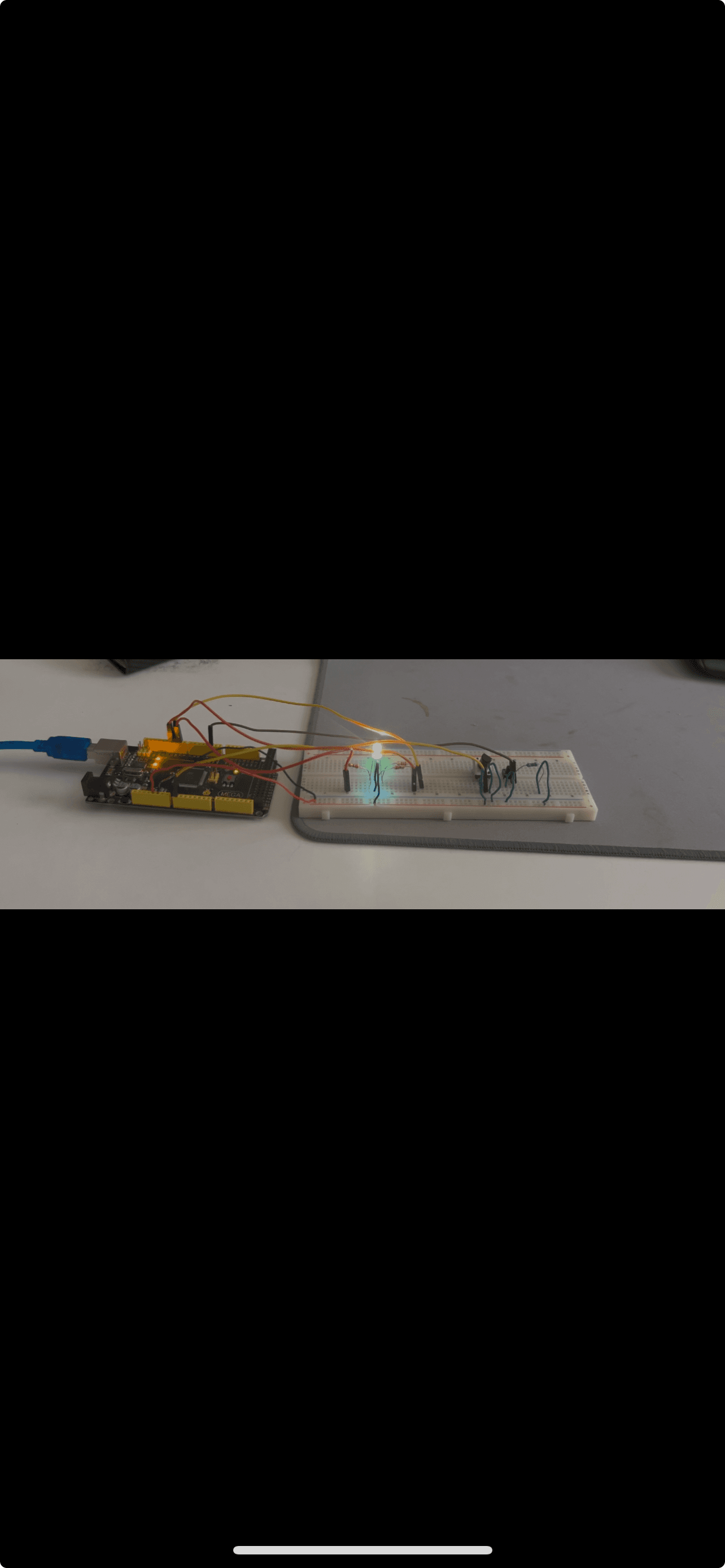
Arduino Mega 2560 firmware demonstrating interrupt-driven input handling, mode-based state machine, and real-time PWM control from analog input.
Implemented an interactive LED control system on an Arduino Mega 2560 using a push button, potentiometer, and RGB LED to demonstrate foundational embedded firmware concepts. The firmware uses hardware interrupts for deterministic mode switching, a three-mode state machine to define LED behavior, and non-blocking millis()-based timing throughout. Each mode maps potentiometer input to a different output behavior: blink interval control, PWM brightness control, and direct RGB channel intensity mapping.
Role
Embedded Systems Engineer
Timeline
Jan 2025 – Feb 2025
Status
Complete
Platform
Arduino Mega 2560
01
Overview
An Arduino Mega 2560 firmware project demonstrating interrupt-driven input handling, state machine design, and non-blocking execution on a bare-metal MCU. A push button cycles between three operating modes while a potentiometer provides continuous analog input that drives a different LED output behavior in each mode.
02
Technical Design
The main loop reads the flag, applies millis()-based debounce, samples the potentiometer, and dispatches to the active mode handler. Each mode is a standalone function — Mode 0 maps potentiometer value to blink interval, Mode 1 maps it to PWM duty cycle, Mode 2 maps it to the RGB red channel. ADC values are mapped to PWM output using the Arduino map() function.
- —Hardware interrupt for immediate, asynchronous mode switching independent of main loop state.
- —Three-mode state machine: blink interval control, PWM brightness control, and RGB red channel intensity mapping.
- —Non-blocking timing throughout using millis() — no delay() calls in any execution path.
Debounce Without Blocking
Mechanical button bounce caused multiple ISR triggers per physical press, resulting in mode skips. Implementing a millis()-based debounce check in the main loop resolved this while keeping the ISR minimal and fast.
03
Outcomes
- —Mode switching responds immediately to button input at any point in program execution with no missed transitions observed.
- —All three modes produce correct output behavior across the full potentiometer range.
- —Firmware operates entirely non-blocking — no delay() calls in any code path.
- —ISR-to-main communication is reliable across all tested interaction sequences with no observed race conditions.
Next Steps
- —Expand to full RGB channel control with independent potentiometer mapping per channel.
- —Add configurable software debouncing with adjustable threshold.
- —Extend mode logic into a more formal FSM with defined transition conditions and entry/exit actions.